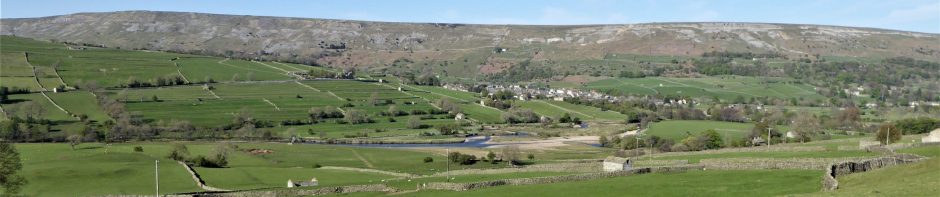
The SWAAG Database (LINKS BELOW) is a large repository of knowledge containing descriptions and images of sites of interest, mainly in and around Swaledale and Arkengarthdale, but also elsewhere in Northern Britain where there is a relevance to the northern Yorkshire Dales.
It has grown as an accumulation of records built-up gradually from 2011, with contributions mainly from our president Tim Laurie but also from other members of SWAAG, all of whom have had access to the database to create new entries. The name of the creator is identified in each record.
Records contain combinations of text, photographs, survey sketches, and drawings, resulting from members’ own field and desk research. Notably, there are thousands of photographs of sites and landscapes of special interest. Subjects are mainly archaeology, but many records are also about related disciplines such as geology and botany. The database contains 886 records, numbered 1 to 1017. The numbering discrepancy was caused by the deletion of some test or incomplete entries.
In later years, contributions of new records slowed and eventually ceased in 2021. Since then, the main imperative has been to preserve the database, a task that has not been without some issues. Occasionally, updates to the proprietary coding language used in the original construction have required modifications to the database to be implemented manually by our voluntary webmaster, SWAAG member Stephen Eastmead, who created the entire SWAAG website.
Format change
In 2023, Stephen wished to retire. No other volunteer with the skills necessary to maintain the database in its current form could be found, and while commercial options were considered, they proved too expensive. Instead, another SWAAG member, Will Swales, who had experience building and maintaining web sites using the popular content-management system WordPress, volunteered to recreate the entire SWAAG web site in that format. The database in its original form could not be transferred into the WordPress system. Instead, it has been converted into Portable Document Format (PDF) files. Large PDF files can be slow to open, so the database has been divided into groups of records, with no more than 50 records per PDF file.
For ease of use, the files have been divided in two different ways (see the links below). One set is divided in numerical order, as determined by the database record Number. The other set is divided by the Category of record, as chosen by each record creator. Categories have also been used in the organisation of the website generally, and so in addition to the links below, each Category PDF can be found under Category menu or sub-menu headings, along with more content relevant to each category. For example, look under the main menu Archaeology to find relevant sub-menus such as Burial Mounds and Cairns, or Rock Art.
Errata
In its new format, the SWAAG database is now a closed resource and cannot be edited. Any factual errors identified can be briefly corrected by submitting a notification and request for its inclusion in a dedicated page of this website. To see the corrections notified to date and to find out how to submit corrections to any other identified errors in the records, click here: Database Errata.
Browsing and searching – All the records in each PDF appear in a single window so to move from one record to another, instead of having to open separate files, you can simply scroll through them. Word-searches within each PDF can be done by clicking on the Find symbol (magnifying glass) on the toolbar, or by using the keyboard command CONTROL + F.
Highlights in a book
In 2012, SWAAG published an illustrated book, picking out some of the highlights of the sites that at that time had been recorded in the SWAAG database. It mainly concerned geological features and the impact of man extracting ores and rocks over two millennia. It was intended as a pictorial taste of features that visitors to the two dales could go and see, in most cases using the Ordinance Survey map co-ordinates provided. See: Swaledale: Where the Gods Shed a Tear: Geology and Industrial Archaeology. (lulu.com)