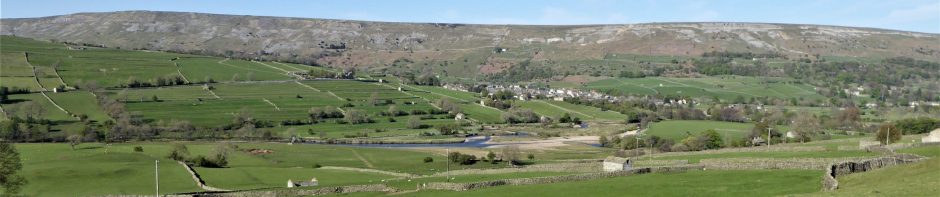

A hoard of 62 Roman denarius coins, now known as The Grinton Hoard, was unearthed in 1988 by a metal-detectorist in a field next to Scarr House, on Swale Hall Lane, Harkerside, west of Grinton village (SE 041 983). They were declared treasure trove and placed in the custody of the Yorkshire Museum at York. Some of them are now on permanent display in the Time Tunnel at the Dales Countryside Museum in Hawes.
The coins were found loose and scattered in a fan shape not far below the surface. It’s thought that at some time in the past they had been grubbed up and pushed around by pigs kept on the farm. Possibly the coins had originally been buried in a leather or cloth bag that had decomposed.
The find was analysed by P J Casey and P Wenham and described by them in a brief article ‘A second-century denarius hoard from Grinton, North Yorkshire’, which was published in the Yorkshire Archaeological Journal (vol. 62, 1990, pp. 9-11).
Nine of the coins were unrecognisable fragments, but Casey and Wenham were able to describe the remaining 53 as having issue dates spanning the years 74 to 169 AD. Condition varied enormously. Only one coin was classified as unworn on both sides, five were unworn on one side, 23 were, at best, slightly worn on one side, 10 were worn or very worn, and 14 were corroded.
Casy and Wenham noted that hoarding coins seems to have been a characteristic of Roman Britain, but that a common speculation that they might indicate an occurrence of a military crisis, didn’t seem likely in this case. They found it wasn’t possible to link this find with any known event such as an attack or rebellion at the likely time of their burial.
Another speculation, by SWAAG member Will Swales, that the hoard could represent a single pay-packet belonging to a Roman soldier and ‘banked’ in the ground, is expressed here: Grinton coin hoard | Swaledale history.
There is also an entry in the SWAAG database, Archaeological Finds category, scroll to record no. 593.